Three configurations
Order the cube that matches the job.
All three are the same 5 cm CubeSat-standard module on the same J1 / J2 fabric, and all three join a cluster the same way. Boards can be added later.
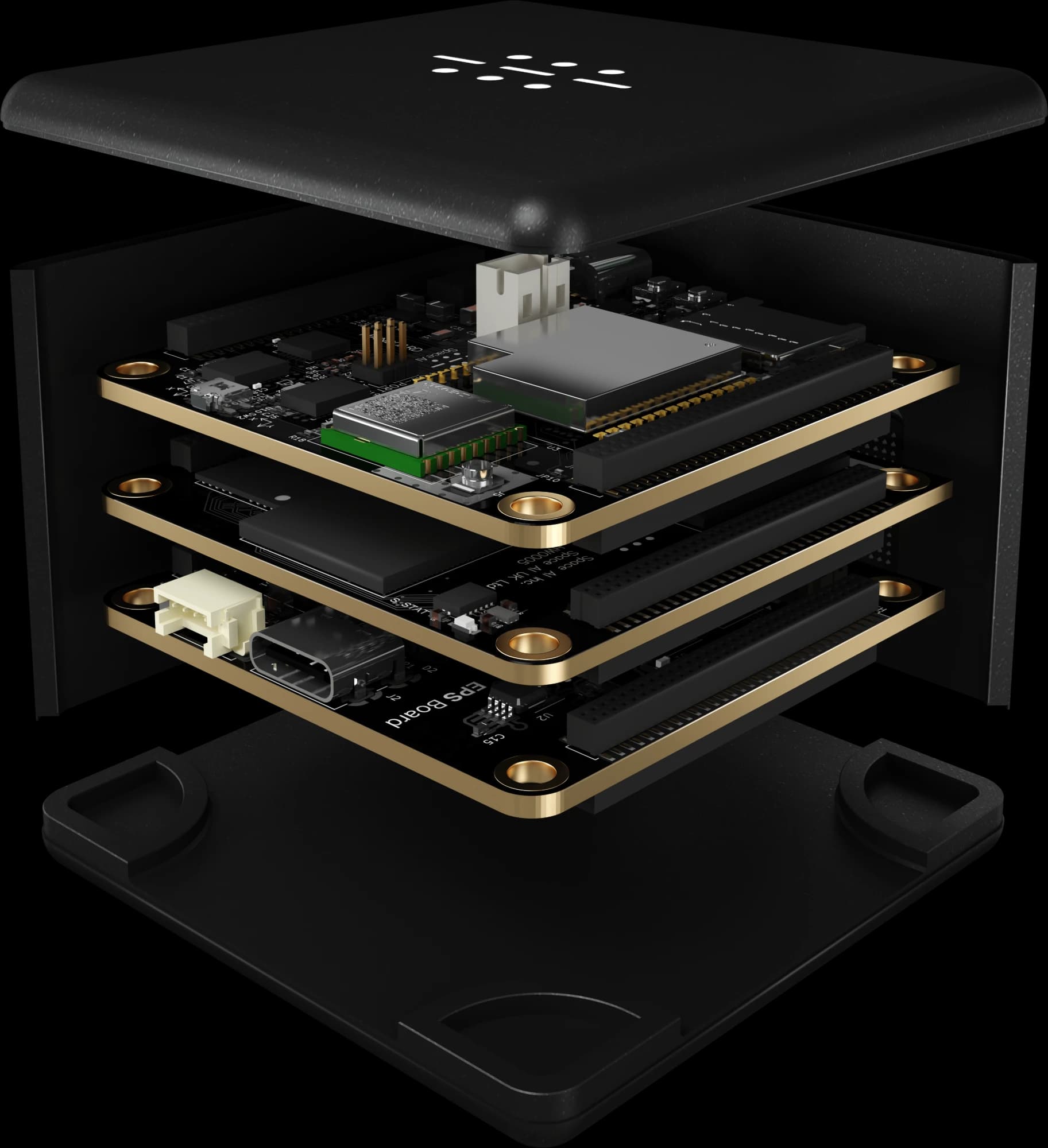
NODE IO Lite
For the Internet of Robotic Things and real-time quantum key distribution.
- Mainboard — orchestration, GNSS-RTK, dual IMU, Wi-Fi 6
- EPS — solar MPPT, Li-Ion, watchdog, event log
- Built for IoRT and real-time quantum key distribution
Balance due before dispatch.
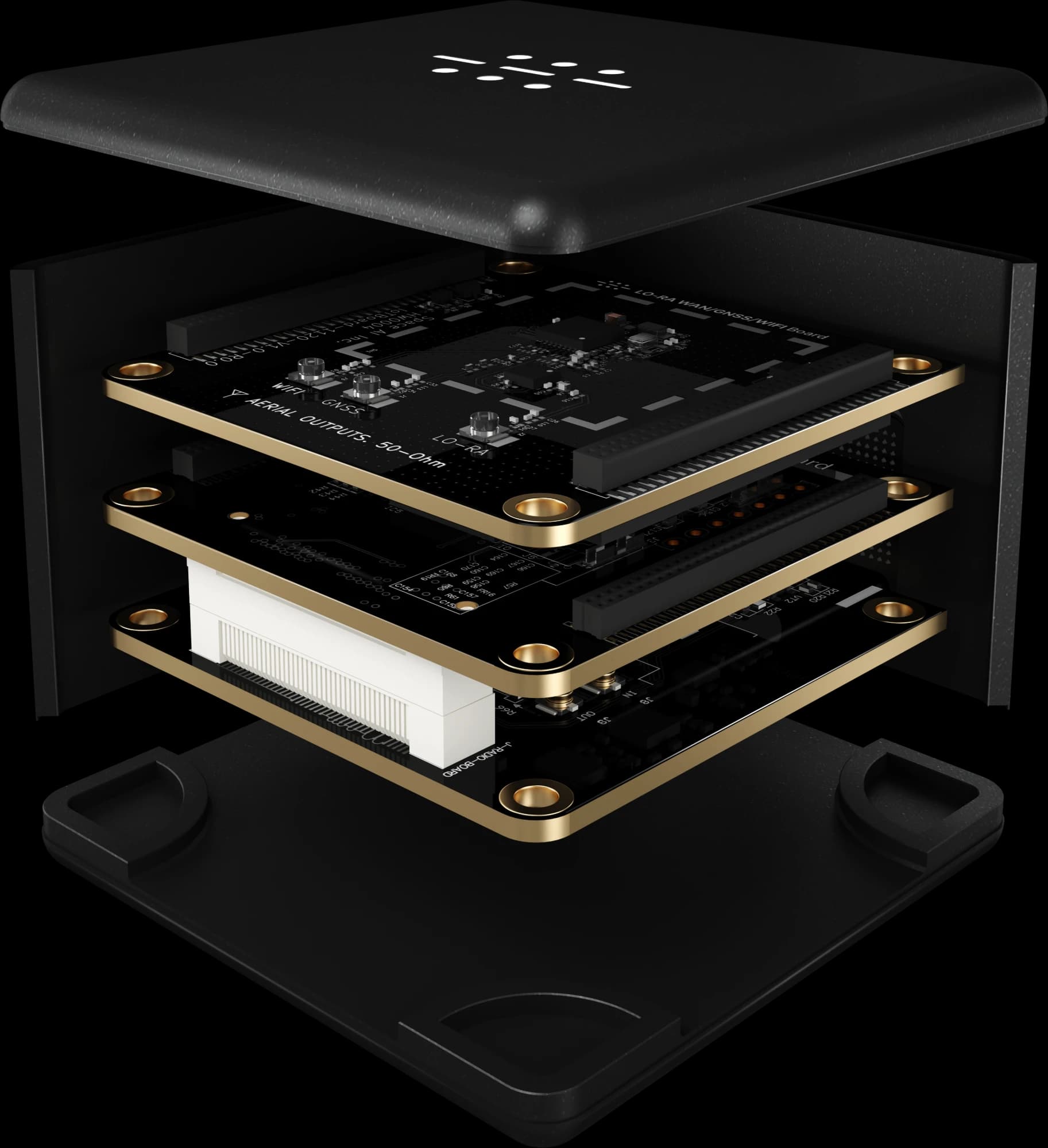
NODE IO SDR
The full software-defined radio, ready to plug into your computer.
- SDR — 100 kHz – 3.8 GHz full-duplex, 2 × 2 MIMO
- Integrated PA, filters and LNAs
- Wideband nano antenna across the SDR's complete spectrum
- IoT — LoRa / LoRaWAN, GNSS and Wi-Fi aerial outputs
- Plugs into your computer
Balance due before dispatch.
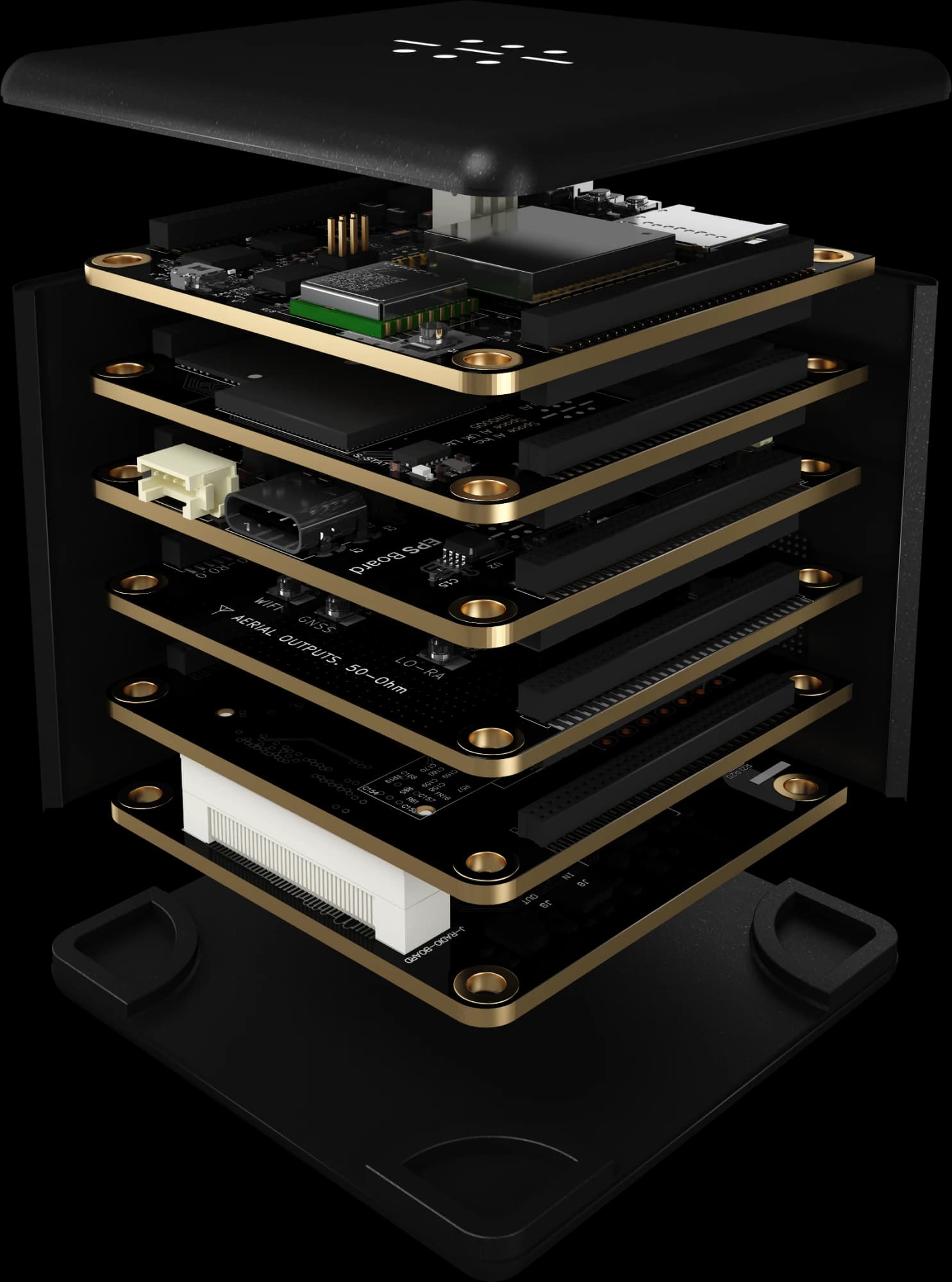
NODE IO FULL
Compute and SDR integrated in one cube.
- Compute — QCM8550, 48 TOPS, 5G, SOS Linux
- SDR — 100 kHz – 3.8 GHz, 2 × 2 MIMO, integrated PA, filters and LNAs
- Wideband nano antenna across the SDR's complete spectrum
- Mainboard, EPS and IoT boards
Balance due before dispatch.
CubeSat standard
CubeSat standard by construction, not by adaptation. The cube that ran on your roof is the cube that flies.
Open source
No proprietary bus to design around: J1 and J2 are published.
Powered by Linux
The same module carries a project from bench prototype to field unit to flight article without a redesign.
One module, many machines
What it becomes depends on which boards you stack.
Every card attaches through the same two 64-pin headers — J1 carrying power, reset and four UARTs, J2 carrying the CAN, SPI and I²C data fabric. Add and remove boards to match the mission; the cube, the standard and the network membership never change.
Board index
Five cards, and what is on each.
The full J1 / J2 pin assignment is in the datasheets. Everything below is the short form.
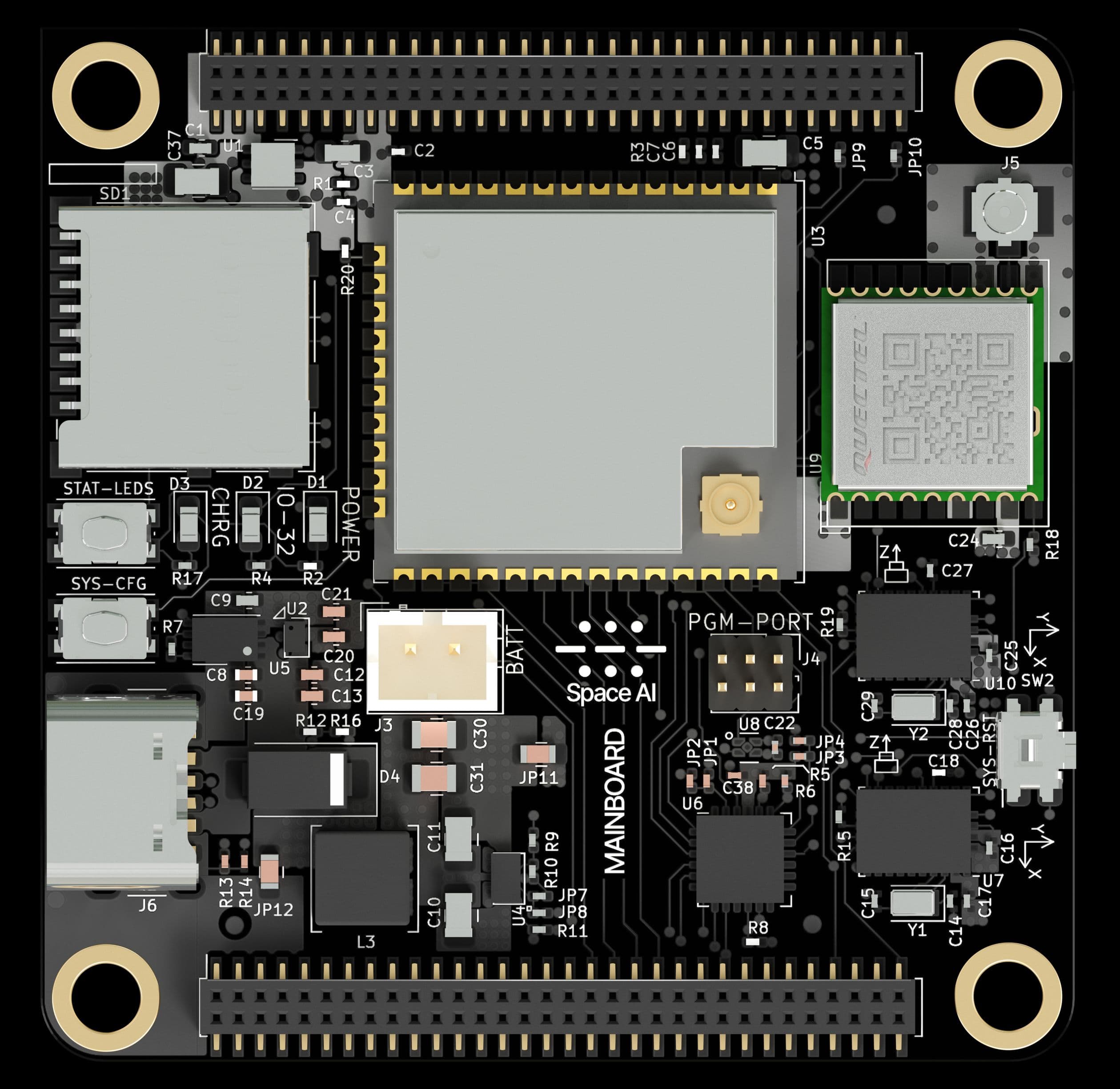
Mainboard
Board 01Orchestration, GNSS-RTK, dual IMU, Wi-Fi 6
Available in: NODE IO Lite · NODE IO FULL
Module
ESP32-C6-WROOM-1 · 32-bit RISC-V 160 MHz + 20 MHz LP
Memory
320 KB ROM · 512 KB SRAM · 16 MB SPI flash
GNSS
SE868K5-RTK multi-band — GPS L1+L5, Galileo E1+E5a, GLONASS, BeiDou, QZSS, SBAS, IRNSS
Motion
2 × BNO055 9-DOF absolute orientation
Wireless
Wi-Fi 6 · BLE 5.3 + mesh · 802.15.4 Zigbee, Thread, Matter
Security
Cryptographic accelerator · TRNG · RTC
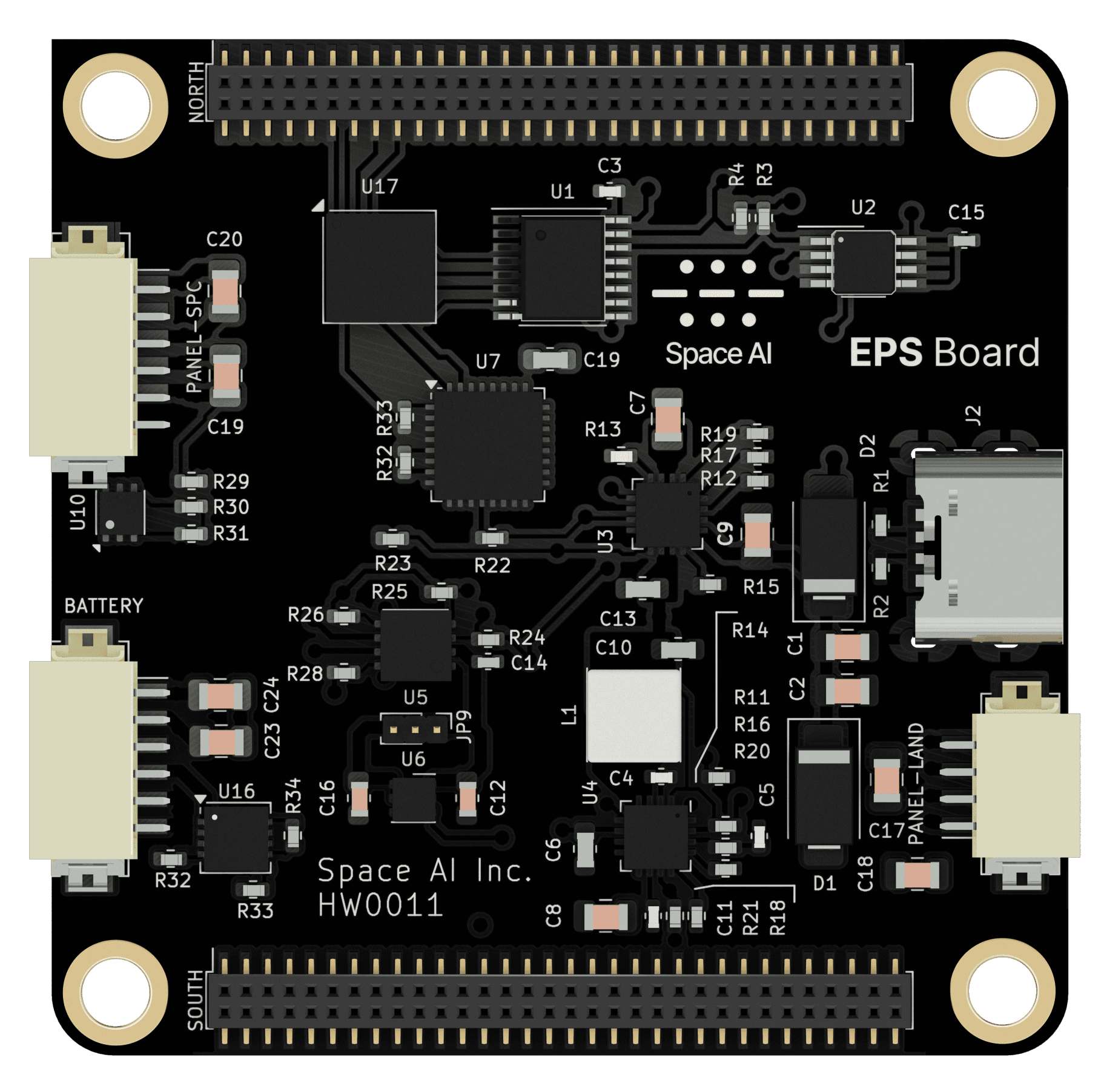
EPS Board
Board 02Solar MPPT, Li-Ion, watchdog, event log
Available in: NODE IO Lite · NODE IO FULL
Battery
Li-Ion 3.6 V pack on a dedicated connector
Solar
Terrestrial 12 V Si mono/poly · space 4–6–8 V GaAsInP — both MPPT
Rails
3 × independent 5 V (2 switchable) · switchable 3.3 V
Supervision
PMB / PMA control and alarm bus · per-board power scheduling
Logging
RTC-timestamped event log
Watchdog
Resets main or compute board on timeout
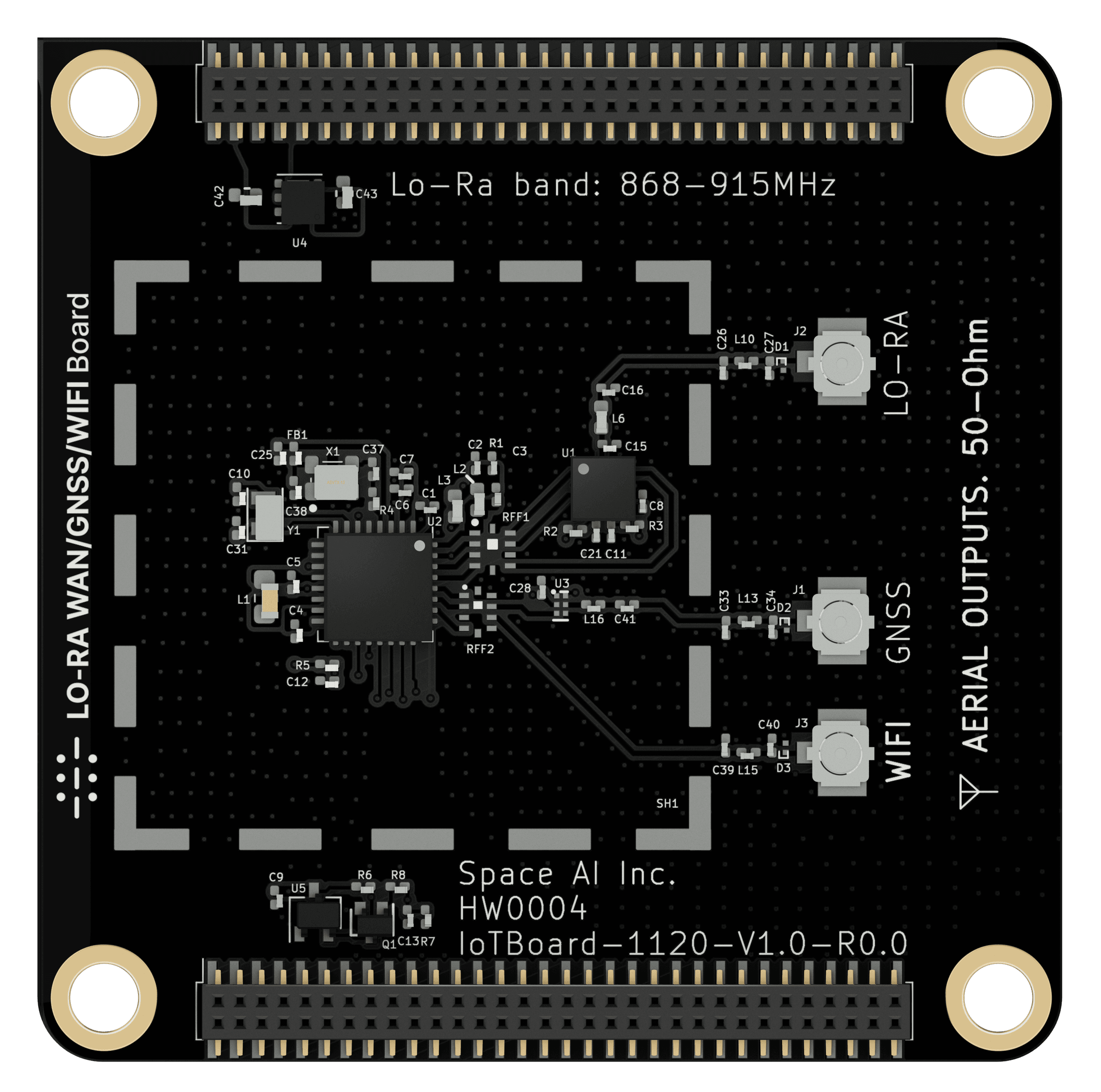
IoT Board
Board 03LoRa / LoRaWAN, 2.4 GHz, S-band satellite
Available in: NODE IO SDR · NODE IO FULL
Transceiver
Semtech LR1120 · LoRa® / (G)FSK half-duplex
Sub-GHz
150–960 MHz · +22 dBm HP / +15 dBm HE
ISM
2.4 GHz · +13 dBm, 50 Ω matched
S-band
1.9–2.1 GHz licensed satellite
Synthesizer
150–2600 MHz continuous
Scanning
GPS / BeiDou and passive Wi-Fi, on-chip
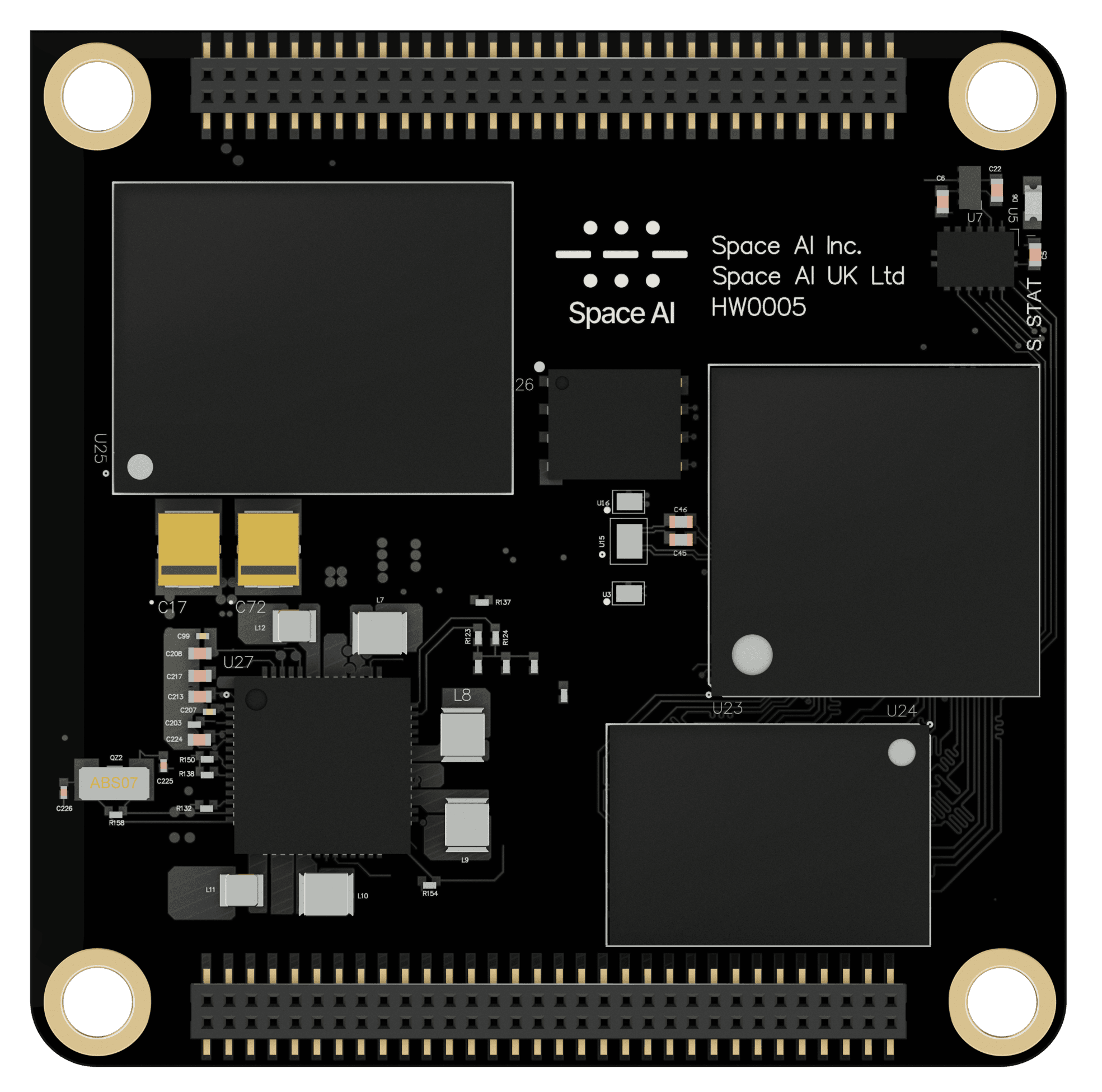
Compute Board
Board 04QCM8550, 48 TOPS, 5G, SOS Linux
Available in: NODE IO FULL
SoC
Qualcomm Dragonwing QCM8550 · 4 nm
CPU
8-core Kryo — 1 × 3.36 GHz + 4 × 2.8 GHz + 3 × 2.0 GHz
NPU
Hexagon Tensor Processor · 48 TOPS INT8 · 12 TOPS FP16
GPU
Adreno 740 · ray tracing · Vulkan 1.2 · OpenCL 3.0
Memory
Up to 16 GB LPDDR5x @ 4200 MHz
Storage
UFS 4.0
Camera
Triple 18-bit ISP · up to 3 × 36 MP or 1 × 10⁸ MP @ 30 fps
Connectivity
5G sub-6 GHz + mmWave (Rel. 16) · Wi-Fi 7 · Bluetooth 5.3
Expansion
PCIe Gen 4 ×2 + Gen 3 ×2 · USB 3.1 Gen 2
Video
8K30 / 4K120 encode · 8K60 decode · AV1
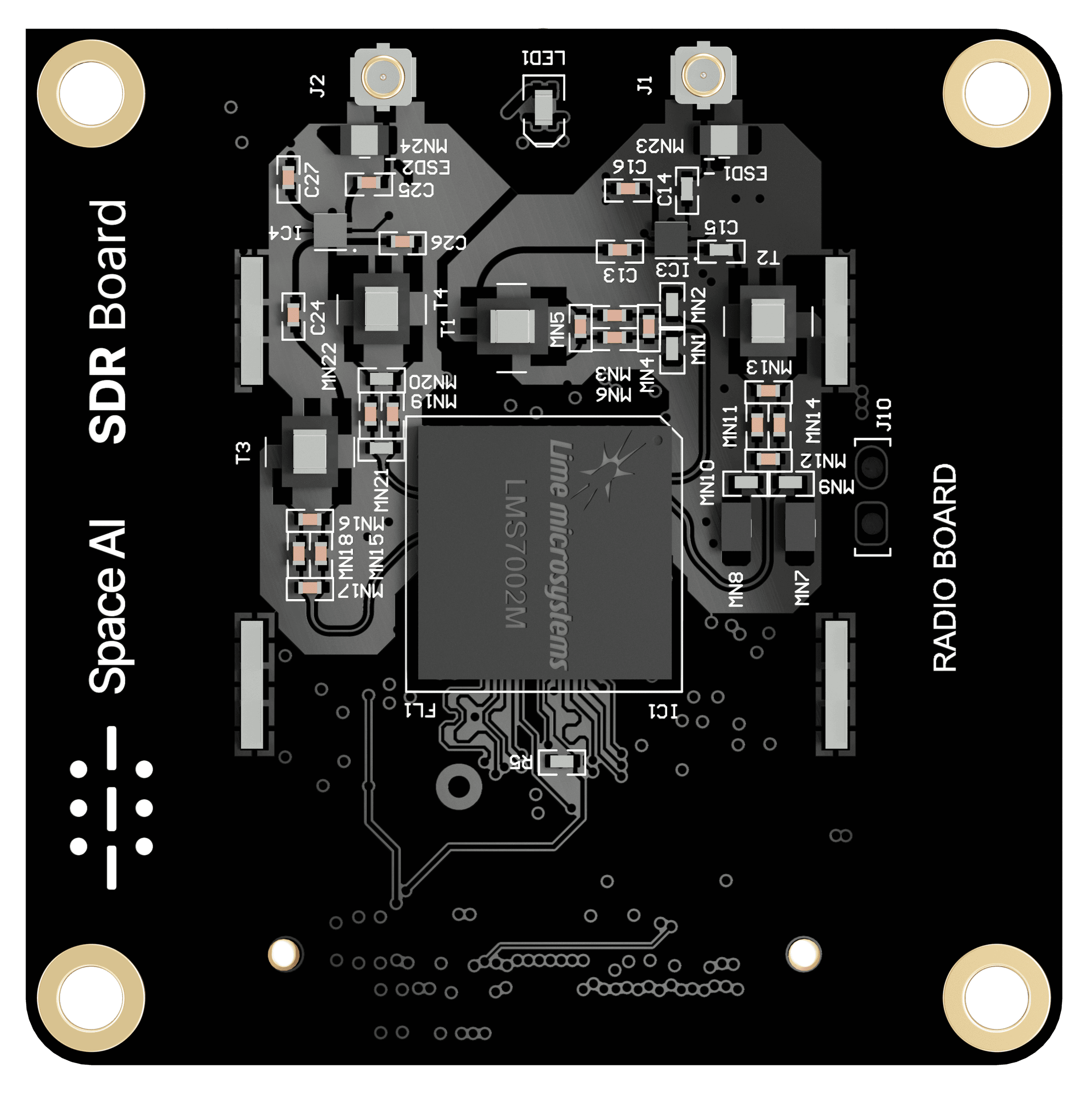
SDR Board
Board 05100 kHz – 3.8 GHz, 2 × 2 MIMO, integrated PA, filters and LNAs
Available in: NODE IO SDR · NODE IO FULL
Transceiver
Lime LMS7002M FPRF + Lattice FPGA front-end
Coverage
100 kHz – 3.8 GHz, reprogrammable on the fly
RF front-end
Integrated PA, filters and LNAs
Antenna
Wideband nano antenna across the SDR's complete spectrum
MIMO
2 × 2 with on-chip RF calibration · TDD and full-duplex FDD
Bandwidth
30.72 MHz RF (up to 160 MHz analog) · 72 MSPS · 12-bit
Reference
±1 ppm initial · ±4 ppm stable
Power
≈880 mW full 2 × 2 MIMO · 550 mW SISO
The same cube, read three ways
What it is depends on who is holding it.
NODE IO is a component, an infrastructure and a membership at the same time. Which of the three you came for changes nothing about the hardware.
If you build machines
The core of the thing you are building.
Open source, CubeSat standard, and built on silicon from the top of each category rather than whatever was cheapest. No proprietary bus to design around: J1 and J2 are published, the OS is Linux, and the same module carries a project from bench prototype to field unit to flight article without a redesign.
For business & government
Distributed infrastructure, not a fleet of gadgets.
Multi-domain swarms — land, sea, air and orbit — as clusters of sensors that compute and decide locally and coordinate over the network. Distributed computing and distributed AI, with no single point of failure to lose and no single point of control to seize. Sovereign by architecture, because the nodes belong to whoever bought them.
If you are one person
Being part of something considerably bigger.
Every cube you connect joins your cluster and adds capacity the network did not have before — compute, storage, and links across ground and orbit. There is no central build-out to wait for and no permission to request. The infrastructure reaches exactly as far as the people building it.